Faux Wedding Flowers: How to Tell Quality From Cheap
· By Val
Faux wedding flowers have changed. Val breaks down real-touch quality, the silk-plus-fresh hybrid trend, and how to spot cheap fakes — honestly.
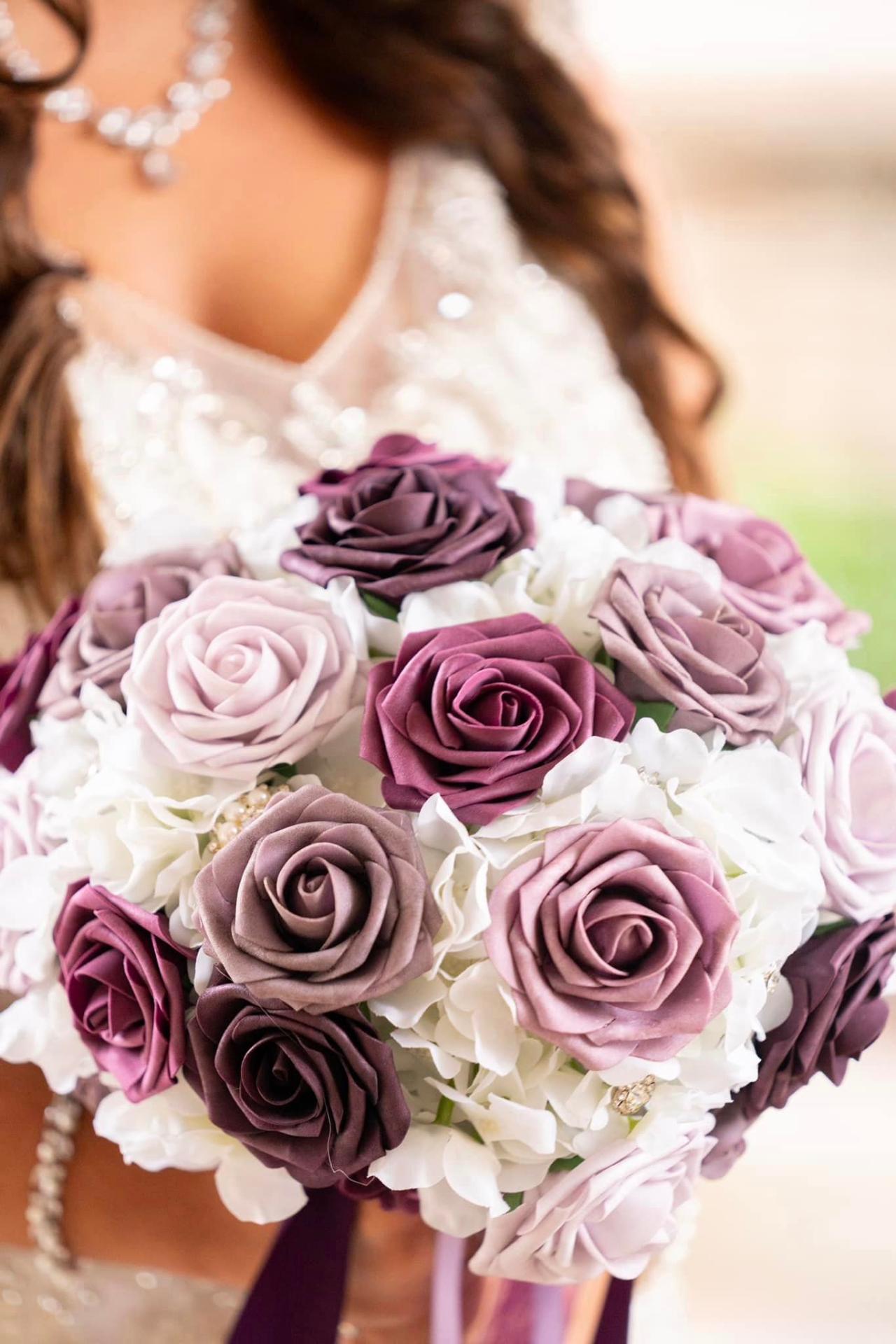
If your mental picture of "fake wedding flowers" is stiff petals and shiny plastic stems from a craft store bin, I have good news: that era is over.
I've been designing faux wedding flowers since 2008, and the difference between what I could order when I started and what I can order today is night and day. Brides shopping my website message me all the time with the same question: "Wait — these aren't real? Are you sure?"
I'm sure. And here's everything you should know about how faux flowers got this good, what separates the high-end blooms from the cheap ones, and my honest take on the biggest floral trend of 2026.
Faux flowers aren't what they were when I started
When I started this business, real-touch flowers barely existed. There were a handful of options, and the overall quality of artificial flowers was a step below what you'd want walking down the aisle.
Today? The options have exploded. Real-touch flowers — the kind made with latex and specialty coatings that look and feel like living petals — come in nearly every bloom and color a bride could ask for. The quality has increased substantially, and it shows most in one place: your photos.
I'll say it plainly, because it's true: you would never know in photos that my flowers are not real.
What my flowers are actually made of
Every arrangement I build uses a blend of materials — silk, real-touch, and latex — chosen flower by flower.
People sometimes ask if I only work with one material, and the honest answer is that material isn't my filter. Quality is. If it's a good quality stem and a good quality flower, it earns a place in my inventory. If it isn't, it doesn't — no matter what it's made of.
That blend approach is what makes a bouquet read as real. Silk gives softness and drape. Real-touch and latex give petals that hold their shape and feel alive in your hands. Mixed together the way nature mixes textures, the result is a bouquet your guests will lean in and touch before they believe you.
The photo test
Here's the test that matters most, because your flowers live forever in your wedding photos.
Bride after bride tells me the same two things: their photographer had no idea, and their guests had no idea. I hear it continuously — after the wedding, in reviews, in messages with photos attached. The professionals whose entire job is noticing detail through a lens couldn't tell.
That's the standard high-end faux flowers should meet. Not "pretty good from a distance." Indistinguishable, up close, in the hands of a photographer.
Want to see for yourself? Browse real bride photos and reviews — then try to spot the fakes. (Trick question. They're all faux.)
My honest take on the hybrid trend
One of the biggest floral trends of 2026 is the "hybrid" wedding: silk flowers for the big installations — arches, centerpieces, ceremony pieces — paired with a fresh bouquet in the bride's hands.
You might expect a faux flower designer to argue against it. I won't. I don't see anything wrong with the hybrid approach at all — and honestly, the reason it works is the same reason my business works: the quality of artificial flowers today is high enough to carry the most photographed parts of a wedding. If you want a deeper side-by-side, here's my faux vs. fresh comparison.
Now, it's not something I offer myself — I ship custom orders all over the United States, designed and finished well ahead of your date, so fresh flowers aren't part of my process. But do I think a bride who wants fresh in her hands and silk everywhere else is making a mistake? Not at all.
Ultimately it's personal preference. It's your wedding day, your vision, and your budget. My job is to tell you the truth about your options, not to talk you out of the ones I don't sell.
How to spot cheap faux flowers
Let's be honest about the other end of the market: yes, cheap artificial flowers exist. Plenty of them.
I see the difference firsthand. Every once in a while I'll try a new supplier, order a flower, and when it arrives it's simply not up to my standard — so I send it back. That's the quality-control step a bride never sees, and it's exactly what you're paying for when you order from a designer instead of a clearance aisle: someone who has already rejected the flowers that would have given you away.
When you're evaluating faux flowers yourself, get them in your hands if you can. Petals should have natural color variation and soft, believable texture. Stems should have weight and shape to them. If it shines like plastic or feels hollow, it will photograph exactly that way.
The part nobody tells you: a good designer works with your budget
Here's something that surprises people. I've had brides who, for budget reasons, went out and purchased their own flowers — and I built their arrangements for them. Their bouquets, their boutonnieres, assembled from the stems they could afford.
I share that because the real secret to wedding flowers isn't a material or a brand. It comes down to your budget, your preference, and finding someone willing to work with you to accomplish your dream and your vision. That's it. That's the whole game.
Whether that's a full custom design in premium real-touch blooms or your own flowers arranged by experienced hands — there's a version of beautiful that fits your number.
Ready to feel the difference?
The best way to understand modern faux flowers is to hold them. Tell me your colors, your style, and your budget, and I'll design something your photographer won't believe — shipped anywhere in the United States, yours to keep forever.